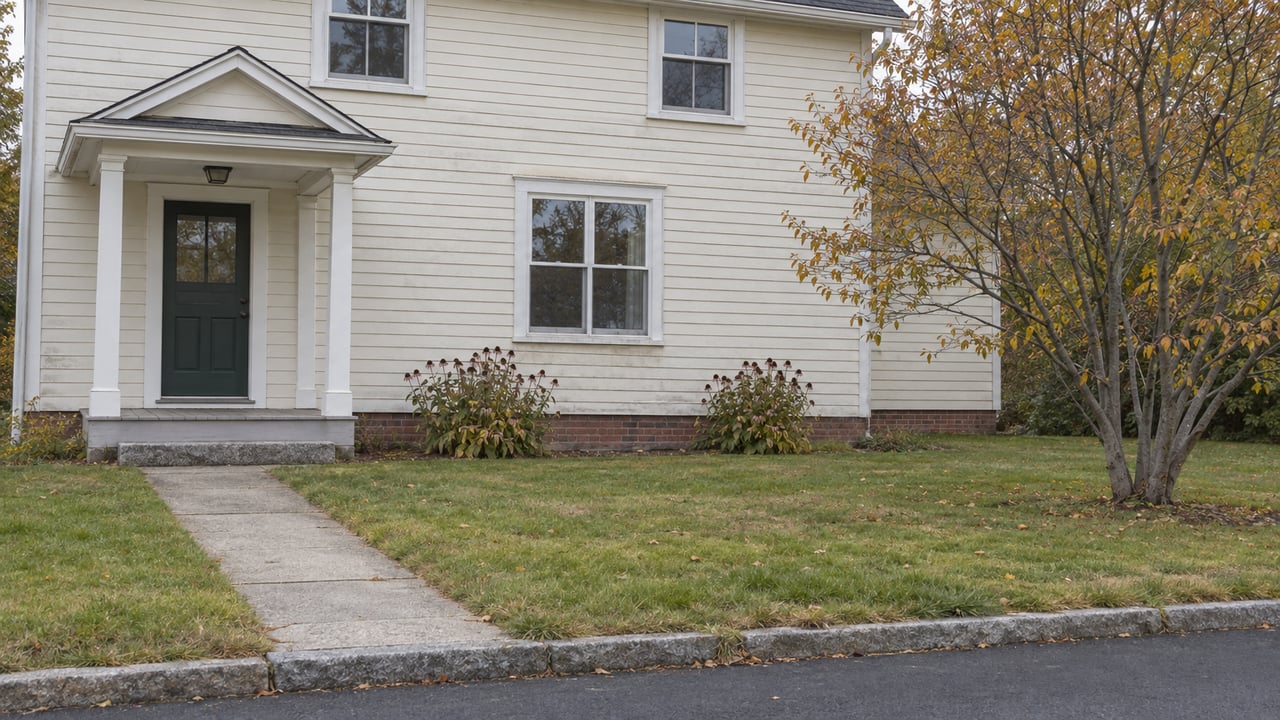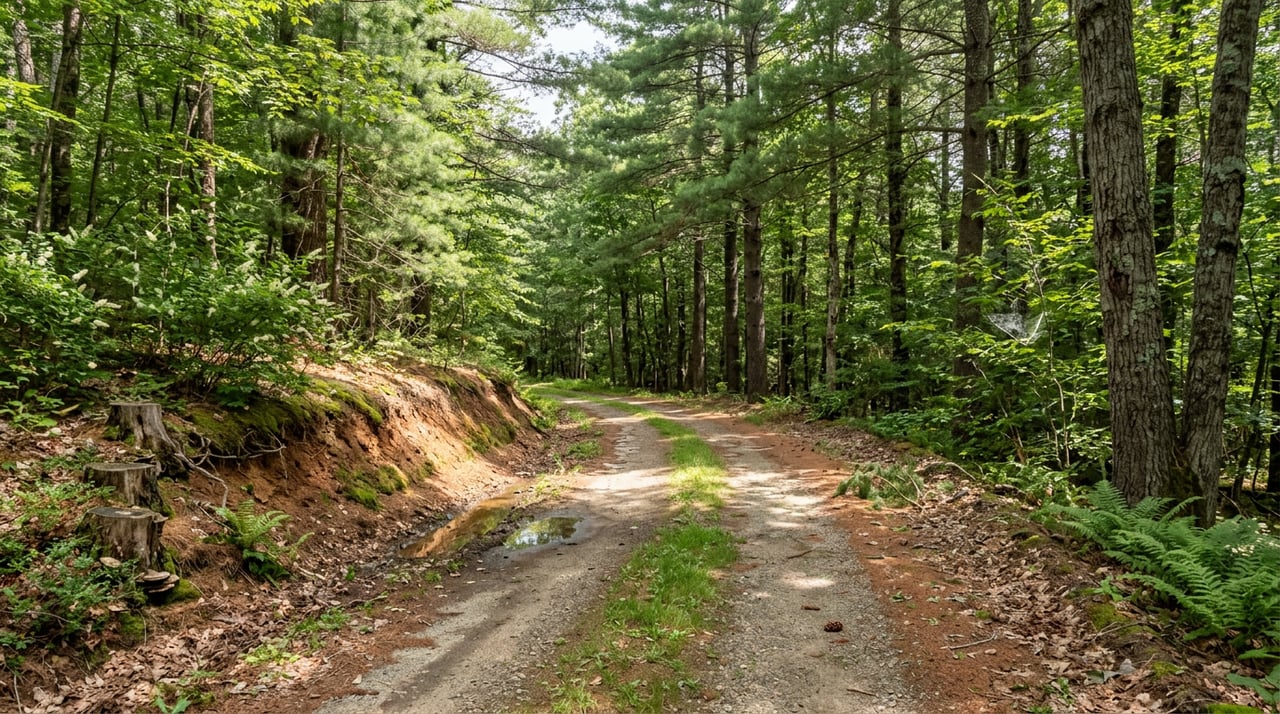
A two-acre parcel near Wallum Lake is listed for $80,000. A few miles away, a 5.49-acre wooded lot sits on the market with more than twice the land. On paper, the smaller parcel looks like the worse deal. It isn't. The Wallum Lake lot comes with an approved septic design, an order of conditions, and a site plan already in hand. The larger parcel still needs a perc test before anyone knows whether a conventional septic system will fit on it at all.
That gap, not the acreage, is what actually prices land in Douglas. If you're comparing lot listings by price-per-acre, you're comparing the wrong number.
The Acre Everyone Quotes, the Lot Nobody Can Build
Douglas's zoning bylaw sets a minimum lot size of 90,000 square feet, about 2.07 acres, in the town's RA zoning district, along with a minimum of 100 feet of frontage. Other residential districts in town allow lots down to 75 feet of frontage, but the RA district, which covers much of the land outside the village center, is where most of the raw acreage for sale actually sits.
Run the math on a real listing and the zoning floor stops being an abstraction. A 5.49-acre wooded parcel doesn't automatically mean five and a half acres of flexibility. Depending on shape, frontage, and how much of that acreage is usable upland rather than wetland or steep slope, it might yield exactly one buildable lot under the same rules that apply to a 2.1-acre parcel next door. Bigger raw acreage doesn't buy you more houses. It buys you more room to solve the problem that actually determines value: where the septic system goes.
This is why a 22.80-acre parcel currently on the market is marketed around its potential for two to four homes on a shared driveway, not simply as "22.80 acres." The seller's pitch leans on the fact that perc testing has already come back favorable. That's a deliberate move, because the acreage number alone tells a buyer almost nothing about what they can actually build.
What a Completed Perc Test Is Actually Worth
A percolation test measures how fast water drains through the soil, and in a town without municipal sewer, it's the test that decides whether a lot can support a septic system at all. Douglas has no townwide sewer service for most of its land area, which means every buildable residential lot in the RA district depends on either a passing perc test and an engineered septic design, or a workaround that adds cost and time.
Here's what that looks like across three real listings on the market in Douglas right now:
| Listing | Acreage | Septic status | What's left before you can build |
|---|---|---|---|
| Wallum Lake area lot, $80,000 | 2 acres | Approved septic design, order of conditions, and site plan in hand | Pull the building permit |
| Wooded parcel, price not published | 5.49 acres | No perc test completed | Order a perc test, then design and permit a system if it passes |
| Shared-driveway parcel, price not published | 22.80 acres (potential 2-4 lots) | Seller reports favorable perc results | Finalize subdivision approval and the common driveway plan |
The $80,000 lot is smaller than either of the other two. It is also the only one where a buyer can walk into the building department with paperwork already approved. That's not a coincidence of pricing. A completed septic design removes a specific, quantifiable risk: the possibility that the land can't support a house at all, or can only support a smaller or more expensive system than a buyer budgeted for. Sellers who've already paid for that certainty price it into the ask. Sellers who haven't are effectively asking a buyer to take on the perc-test risk themselves, usually in exchange for a lower number per acre.
For a practical buyer, that means the real question on any raw land listing in Douglas isn't "how much per acre." It's "who pays for the perc test, and what happens to this deal if it fails."
The Exception: Land That Isn't Priced on Septic at All
Not every parcel in Douglas plays by the residential rulebook. A roughly 6.28-acre listing near Routes 16 and 146 is marketed for industrial use, and its pitch has nothing to do with soil percolation. The value driver there is highway access for transportation and distribution operations. Douglas's own economic development page makes the same point about the town's featured development sites, calling out proximity to Route 146, the corridor connecting Rhode Island to the Massachusetts Turnpike, as one of the reasons those parcels are positioned for full development.
That's worth knowing if you're an investor scanning listings by acreage and price alone. Industrial and commercial-zoned land near the Route 16/146 corridor is priced on infrastructure access. Residential-zoned acreage in the RA district is priced on septic feasibility and the 2.07-acre zoning floor. They're not the same market, even when the listings sit a few miles apart.
Why the Math Might Not Stay the Same
Douglas has spent the past two years rewriting its Master Plan, the document that sets the town's long-range direction on land use, housing, and development. The process started in the summer of 2024, ran through a community survey and workshops into 2025, and moved into public comment and a final community workshop this spring. A Select Board vote was slated for this summer.
A Master Plan doesn't rewrite the zoning bylaw by itself. But it's the document that shapes which zoning changes a town takes seriously over the following decade, and land use is explicitly one of the topics this update was built to address. Anyone buying raw acreage in Douglas with a multi-year build timeline should know that the dimensional rules driving today's math, the 2.07-acre minimum and the 100-foot frontage requirement, are being discussed by the same town government that will eventually decide whether to keep, loosen, or tighten them.
That's not a reason to wait. It's a reason to read a listing's zoning status as a snapshot, not a permanent fact.
What This Means If You're Actually Shopping
If you're looking at land in Douglas as an investment or a future build site, three questions matter more than the acreage number on the listing:
- Has a perc test been completed, and did it pass? If not, budget for the test and the possibility that it comes back unfavorable.
- Is there an approved septic design, order of conditions, or site plan already on file? Each of those documents transfers real risk off your plate and is worth paying for.
- Does the parcel sit in the RA zoning district, and does it clear 90,000 square feet with 100 feet of frontage as a single buildable lot, or does it need subdivision approval to split into more?
A parcel that answers all three questions cleanly, like the Wallum Lake lot with its septic paperwork already done, is worth more per acre than a larger, cheaper-looking parcel that hasn't been tested at all. That's not a quirk of this particular market. It's how the price of raw land works whenever the same acre can turn out to be buildable or unbuildable depending on facts nobody sees until after a survey crew visits.
Common Questions
Does more acreage automatically mean I can build more than one house in Douglas? No. Douglas's RA zoning district sets a 90,000-square-foot minimum lot size with 100 feet of frontage per lot. A larger parcel only supports multiple homes if it can be legally subdivided into lots that each clear that minimum, which depends on shape, frontage, and usable upland, not total acreage.
Why does a perc test matter more than lot size when I'm comparing listings? Because Douglas has no townwide sewer service across most of its land area, every buildable residential lot needs a septic system that a soil percolation test has to confirm is possible. A large lot that fails its perc test, or hasn't been tested at all, carries more real risk than a smaller lot with an approved septic design already on file.
Is now a good time to buy land in Douglas? That depends on your timeline and your risk tolerance for the town's ongoing Master Plan process, which moved through public comment this spring with a Select Board vote expected this summer. The zoning rules governing lot size and frontage are current as of today, but they're the kind of rules a Master Plan update can eventually influence.
If you're weighing a specific parcel in Douglas, or trying to figure out whether a listing's price reflects real septic groundwork or just an optimistic acreage number, Beech Homes Group can walk the zoning and septic status with you before you make an offer. Get a Free Home Valuation and let's talk through what a given lot actually costs to build on, not just what it costs to buy.